According to the dictionary, the noun ‘clutter’ refers to a collection of things lying around in an untidy mess. To ‘declutter’ is the verb, the action of removing the unnecessary items. Thus removing the untidy mess. To actively declutter a space, I plan first and then act second. Here are my specific tips for the decluttering process:
Decluttering starts with my thought process and my household rules that support my simple living space. I have my rules written down for me to review before I start.
Rule #1: I determine how much I need before I start to declutter a space or group of items. This requires research, observation, and awareness. For example before I determine how many pots and pans I needed for my kitchen, I decided I would observe my cooking habits over three weeks. Whatever I used, stayed. Whatever I did not use, removed. I cut my pot collection by 2/3rds.
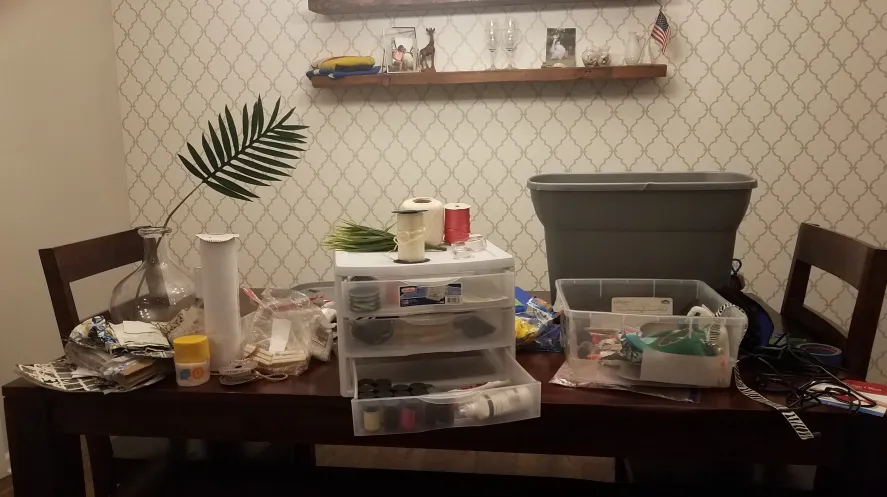
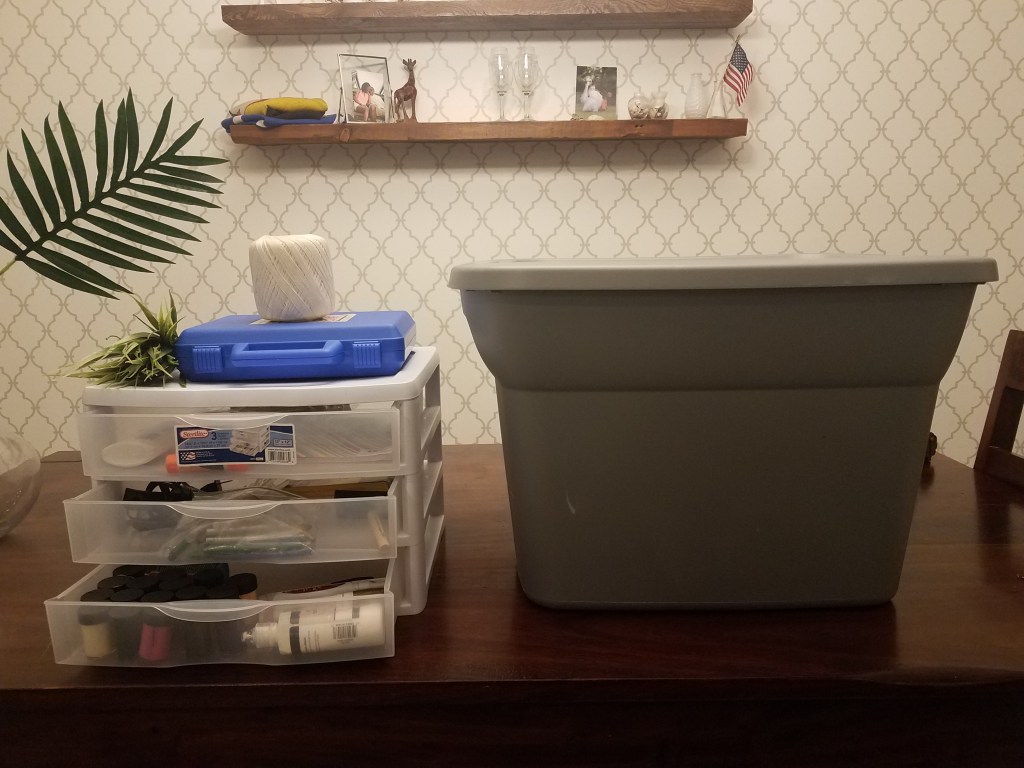
Rule #2 : I determine the size of the area or container for the outcome before I start. Over this past weekend, I decluttered and then organized my DIY and art supplies from one bin (I love to DIY and do crafts with my children so to be honest, I have a few bins). I determined the size of the container for the outcome, and then started working.
Rule #3: I determine an established time frame for keeping an item based on one usage. Three years ago, my time frame was one year for all items. Today, my time frame for keeping an item inside the house is one use every 1-3 months, depending on the item. I allow one use a year for an item in the garage. The garage contains items like Christmas decorations and camping gear. I have become much stricter on items that serve one purpose.
Rule #4: I do not allow “what if we need it one day” items or “what if I start doing” items to stay. When that illusive day arrives, we will not remember this item, or not know where it is, and will probably use an item that is familiar and within the structure of our weekly routine.
Rule #5: Every item should have a designated place. If an item does not have a place, it is not important enough in my space. It goes. Sidenote: junk drawers do not count as a designated place.
Rule #6: All similar items should belong in a group in one desiginated place. This allows me to know how much I have of a particular item, to use what I have on hand, and to determine if and when I need more.
Rule #7: Every open space, drawer, and cabinet does not need to be filled. Secret: I have several empty drawers in my kitchen. As of right now, I have nothing to put in them.
After examining the rules, I am ready to get started with action. I create a Keep, Donate, Trash sections. Then I decutter one specific group of items at time. Only the “Keep” items are allowed to stay in my space. The “Keep” items must meet the above criteria.
I do allow for mistakes. I stack the donate items in the corner of the garage with an expiration date of my choosing clearly written on top. If I need the items, I still have them. However the majority of the time, I forget the items are there. Those items are then donated.
When do you plan to get started? What room or group of items will you declutter first?
Decluttering will be an ongoing effort. McDonald’s gives out plastic toys at every visit.
Drop me a note if you have questions.
RS